
Hoses & connectors: $100–$200
The brittle old flexible behind the cooktop: tiny part, outsized share of the leaks we find.
Gas is the one trade where "pretty confident" is not a standard. Leaks found and repaired, cooktops and heaters connected, lines run and certified: all of it by licensed gasfitters, all of it pressure-tested before the gas goes back on in Coogee.
NSW reserves every gas task, down to connecting an oven, for licensed gasfitters, and the logic is unsentimental: plumbing mistakes stain ceilings, gas mistakes burn houses and poison air. The leaks we attend have a recurring origin story, and it is rarely the pipework’s idea, it is a confident DIY connection or a handyman’s thread tape, discovered later by someone’s nose.
What the licence actually buys is the ending: the whole installation held against a manometer until the needle refuses to move, every appliance checked for a clean blue burn and honest ventilation, and the work done to AS/NZS 5601, the clause your insurer reaches for when something ever goes wrong. Across Coogee and the Eastern Suburbs, no gas job of ours skips that ending.


Right on the coast, windblown sand and salty air work into drains and pipework, causing gradual blockages and corrosion. We flush them clean.
Three things, none needing a plumber: the condition of the fittings at the meter, whether any external gas pipework has rust breaking through the coating, and whether the flexible hose on an outdoor appliance has gone hard or cracked.
Any of those means booking a test. A gas leak on a coastal property usually begins as corrosion that was visible for a year first.
In a block the line into your kitchen is usually the end of a service other homes depend on, so isolating, testing and proving that section still holds is part of even a simple cooktop swap.
Pool heaters, outdoor fires and alfresco appliances are common on waterfront properties, and they are the largest gas loads most homes ever add. A pool heater alone can exceed the rest of the house combined.
So the first question is never the appliance, it is whether the meter and the run can carry it. That gets established before anything is ordered, because the alternative is an expensive heater that never reaches temperature.
Ventilation and clearance clauses were not written with small apartment kitchens in mind, and they regularly rule out the position people assume will work. We establish a compliant location first.
Older properties routinely have redundant gas pipework, a disconnected heater, a removed stove, a fireplace converted decades ago: and it is not always capped to any standard, or capped at all.
Those are found by pressure testing the whole installation rather than the part in use. It is the single most common reason an old house fails a test, and it is usually inexpensive to put right once located.
Putting a gas cooktop where there was not one, or moving an appliance during a renovation, is rarely just plumbing in a block. It usually requires an owners corporation approval, sometimes a by-law, and always correct ventilation and flueing for the space.
Gas installations and appliances are governed by AS/NZS 5601:2022, referenced in the Gas and Electricity (Consumer Safety) Regulation 2018 and legally enforced in NSW (NSW Government), covering pipe sizing, ventilation and appliance clearances. It is licence-only work.
We will tell you what the work needs before you go to the committee, so the application you submit is the one that gets approved rather than the one that comes back with questions.
Salt attacks external gas pipework, regulators, meter connections and appliance fittings continuously. It is the reason a coastal property routinely fails a pressure test at a fitting rather than in a length of pipe.
Visible rust staining or white crusting at a joint is the early warning. It is cheap to address at that stage and considerably less so once the fitting is weeping gas.
The brittle old flexible behind the cooktop: tiny part, outsized share of the leaks we find.
Thread and valve leaks sealed properly and proven again on the gauge.
Corroded or damaged sections replaced; concealed lines with access work run $800–$2,500.
Connected, tested, certified. New line or bayonet to reach it quoted fixed on top.
Sydney's 2026 licensed-gasfitter range; attendance typically $80–$150. Certification is included, because without it there is no job.
No gas job of ours ends without holding pressure on a gauge, that is the receipt that matters. Figures here are indicative of the 2026 Sydney market rather than a quote from us, you get your own number as a fixed price before any work starts.
Suspected leaks start with the supply off at the meter and air moving through the space. Diagnosis begins only after the installation stops feeding the problem.
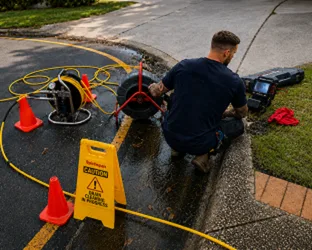
A manometer says whether the system is losing gas; detection fluid and instruments then walk the installation to the guilty joint, fitting or run.

The failed component comes out and compliant material goes in, to AS/NZS 5601, whether that is one connector or metres of rerun line.
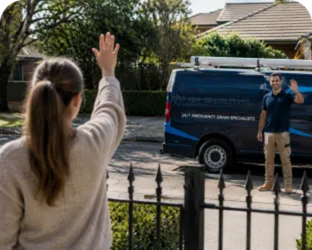
The full installation holds on the gauge or we are not done. Appliances relit, flames checked blue, ventilation confirmed, compliance documented.
New cooktop in its box, a bayonet that needs moving, or a smell you are not sure about: call and it gets done properly.
Licensed gasfitters, every job pressure-tested and certified. Smell gas right now? 131 909 first, then us.

Leave your details and our local Coogee team will call you back fast.