
Call-out or first hour: $80–$180
What most Sydney plumbers charge to attend and start work. Ask for it on the phone. Anyone who will not name it has answered a different question.
A licensed, insured plumbing crew working the streets around Coogee week in and week out. Everyday repairs and planned work, priced up front, finished in one visit wherever the parts allow.
The second visit to a house is always faster than the first. A plumber who has already seen your meter position, your hot water unit, the age of the pipework and where the previous owner moved a bathroom arrives knowing half the answer, and that shows up in both the diagnosis and the bill.
That is the argument for having one local crew rather than whoever appears first in a search. We work Coogee and the streets around it constantly, so most of what we are called to we have seen a street away the same month.


Right on the coast, windblown sand and salty air work into drains and pipework, causing gradual blockages and corrosion. We flush them clean.
Sand drains freely, which sounds helpful and is, until you consider what a pipe is resting on. Fine material migrates over time, particularly where water moves through it, and bedding that supported a line evenly when it was laid can wash out from under sections of it.
The result is not usually a break. It is a gentle sag, and a sag holds water and collects what passes through. It is a good argument for looking inside a line before assuming a recurring problem is behavioural.
Apartment work is often less about the plumbing and more about coordination: getting into the unit below to see where it is landing, booking a lift, giving notice for water shutdown to a whole line of lots.
A plumber who does this regularly plans for it. If we need to isolate a riser, we will tell you what notice the building requires and work to it, because turning up and shutting water off to twelve apartments unannounced is how a small job becomes a building-wide complaint.
An older house is rarely on one generation of plumbing. It is on four, each added by someone solving that decade's problem, and the joins between them are where most faults sit. Lead to galvanised to copper to PEX, with a bathroom relocated somewhere along the way.
That is why a proper first visit to a period home is slower than it looks like it should be. Understanding what is actually there prevents the repair that fixes one thing and disturbs two others.
Heavy coastal downpours overwhelm blocked stormwater pits near the beach. We clear them fast to stop flooding.
Proximity to open water shortens the life of anything metal outside: tap spindles, external copper, hot water unit casings and the fixings holding them up. It is a slow, even process rather than a dramatic failure, which is why it tends to be noticed all at once.
Specifying for the environment costs very little at the point of installation and a great deal afterwards. Where a fitting will live outside near the water, it should be chosen for that from the start.
Older cottages and interwar homes still run on original clay pipes prone to cracks and root intrusion. CCTV shows us exactly what’s going on.
Clay is not a defect. It is rigid, round and predictable, and a well laid clay line can outlast the house above it. What ages is the joints: short pipe lengths mean many of them, and the mortar or rubber ring at each one is the part that gives.
That geometry is why a clay line is usually the easiest kind to repair properly. The barrel is generally still sound, so the work is sealing joints rather than replacing pipe, and that can be done without opening the yard.
If something backs up at roughly the same spacing each time, eighteen months, then eighteen months again, that is not bad luck and it is not what anyone is putting down the sink. It is a fixed defect filling at a predictable rate.
The interval is genuinely diagnostic. Fast regrowth points at a live root mass through an open joint; slow build points at grade or debris. Keep the dates on a note in your phone, they tell a plumber more in ten seconds than a description of the symptoms.
What most Sydney plumbers charge to attend and start work. Ask for it on the phone. Anyone who will not name it has answered a different question.
The standard weekday range once the first hour is done. After-hours and weekends sit higher, because someone is out of bed for it.
Tap and mixer replacements, toilet repairs, a failed valve, swapping tired flexible hoses. Attendance plus the work plus minor parts.
Elements, thermostats, valves and anodes on a tank with life left in it. A full replacement is quoted separately and depends on the unit.
Renovation rough-in, gas line work, anything needing excavation or a second pair of hands. You get a written figure before it starts.
These are market ranges, not our quote. The price for your job is agreed before anything begins. Figures here are indicative of the 2026 Sydney market rather than a quote from us, you get your own number as a fixed price before any work starts.

One call reaches someone who can tell you what it probably is and what it is likely to cost, including when the honest answer is that it can wait until the week.
The nearest available crew covers Coogee and the streets around it, stocked for the faults this housing stock actually produces rather than a generic van fit-out.
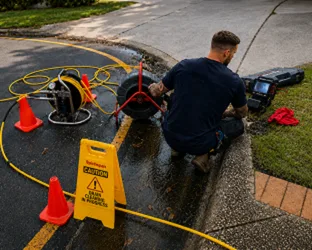
You see what failed and why, and you get one fixed number covering the repair. If opening it up changes the job, you hear that then and not later.

Completed, tested, tidied, and documented where NSW requires a compliance certificate for the work carried out.
Describe it and we will tell you whether it is a plumber, a gasfitter or neither, and whether it is worth doing today or booking for the week.
Licensing, pricing, timing and the things worth asking before anyone starts.

Ring us and a tradesperson picks up. Or leave your details and we will call back with a window we can actually meet.

Leave your details and our local Coogee team will call you back fast.